
What Does OSHA Actually Require for Handwashing?
People assume there's a blanket handwashing law for every job site. There isn't, not exactly. OSHA 1926.51(f)(1) kicks in specifically when workers are applying paints, coatings, herbicides or insecticides, or handling other contaminants that call for washing off exposure. That's the trigger. It's not about lunch breaks or general courtesy. Separately, OSHA 1926.51(a)(1) requires an adequate supply of potable water at all places of employment, which is the broader piece contractors in Towson often overlook. If you're staffing a general industry site rather than construction, the ratio comes from OSHA 1910.141(c)(1)(i) instead, which sets toilet facility counts by employee headcount. And once you've got a washing station in place, 29 CFR 1910.141(d)2) matters just as much: soap and towels or a hand-drying device have to be there. Hand sanitizer alone doesn't satisfy it. We hear that surprise a lot. A site super in Towson will stock sanitizer thinking it covers the requirement, then find out during an inspection it doesn't. If you're unsure which standard applies to your crew, our OSHA portable toilet requirements page breaks down toilet counts too, since the two rules often get mixed up.
How Many Handwashing Stations Does a Job Site Need?
There's no fixed station-per-worker number in the general construction rule the way there is for toilets. Toilet counts follow OSHA 1926.51(c)(1): one facility for 20 workers or fewer, then one toilet seat and one urinal per 40 workers as headcount climbs past 20, dropping to one per 50 once you hit 200 workers or more. Handwashing gets planned around that same headcount, plus where the contaminant work is happening on the footprint. If painting or coating work is clustered at one end of a site, put a station there, not just by the trailer. Agricultural operations follow a different rule entirely: OSHA 1928.110 sets field sanitation at one facility per 20 hand-labor employees, and it has to sit within a quarter mile walk. That distance rule matters for farm work around farm and agricultural restrooms jobs we service outside Towson proper. For a typical build site, we usually pair handwashing units alongside standard porta potty rental placements so crews aren't walking across the site twice. Need help figuring out the right count for your crew size? Our how many porta potties do I need guide walks through the math, and it applies the same logic to wash stations.
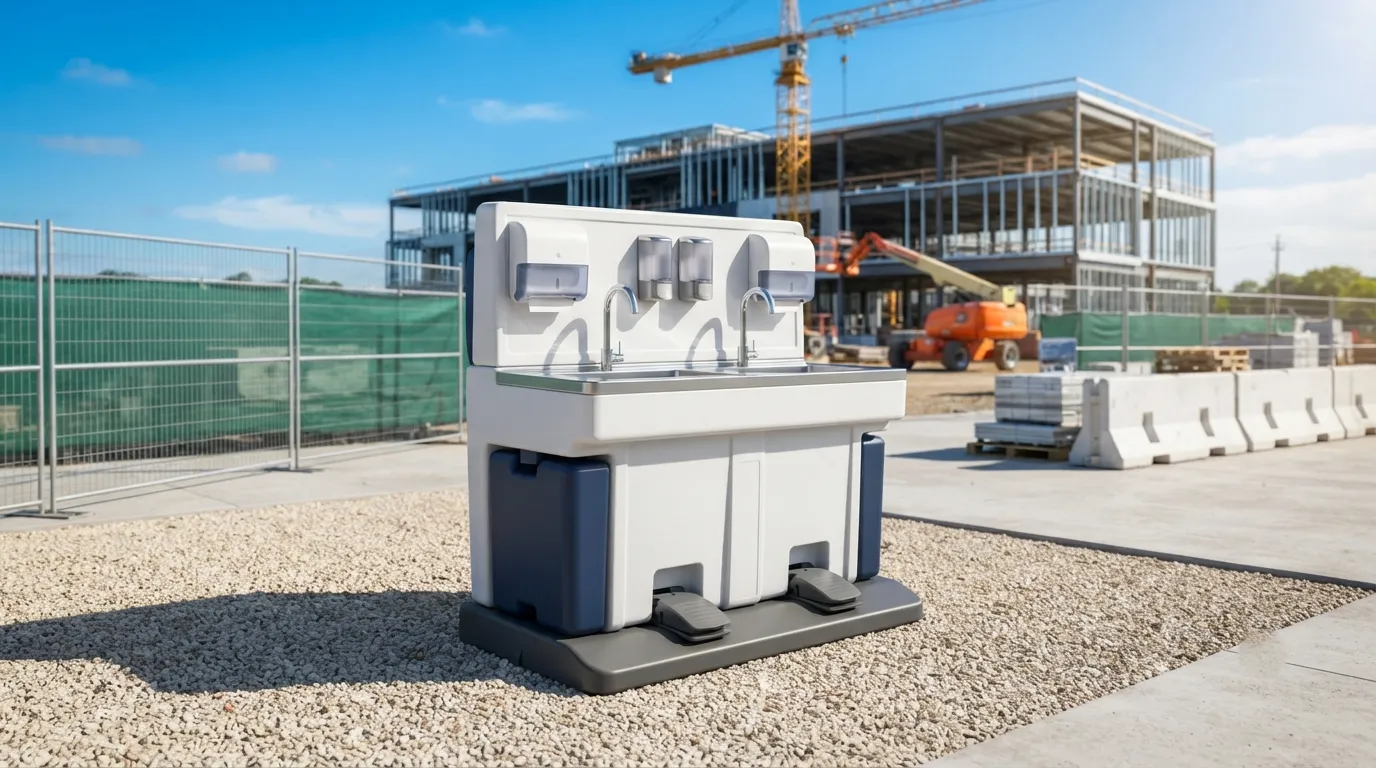
Where Should Handwashing Stations Be Placed on Site?
Placement rules borrow from accessibility standards even on job sites with no public access. ADA Standards section 403.5.1 sets a 36 inch minimum clear width for the route leading to any station, and section 404.2.3 requires at least a 32 inch clear door opening on accessible units. If you're clustering multiple portable units, ADA Standards section 213.2 requires at least 5 percent to be accessible, never fewer than one. A 60 inch turning circle, per ADA Standards section 304.3.1, needs to be clear at the accessible unit too. Ground conditions matter as much as distance: ADA Standards section 302.1 calls for stable, firm, slip-resistant surfacing, which rules out loose gravel or soft turf as a pad. We see this trip up sites near Lutherville, 3.1 miles north of Towson, where slope and drainage push stations onto poor ground if nobody plans ahead. Reach height matters too: ADA Standards section 308.2.1 caps forward reach at 48 inches high with a 15 inch minimum low reach, and section 309.4 requires controls operable with one hand and no more than 5 pounds of force. If a ramp is involved, ADA Standards section 405.2 limits running slope to 1:12. Our ADA accessible porta potty page covers unit specs matching these numbers directly.
Does Hand Sanitizer Count as a Handwashing Station?
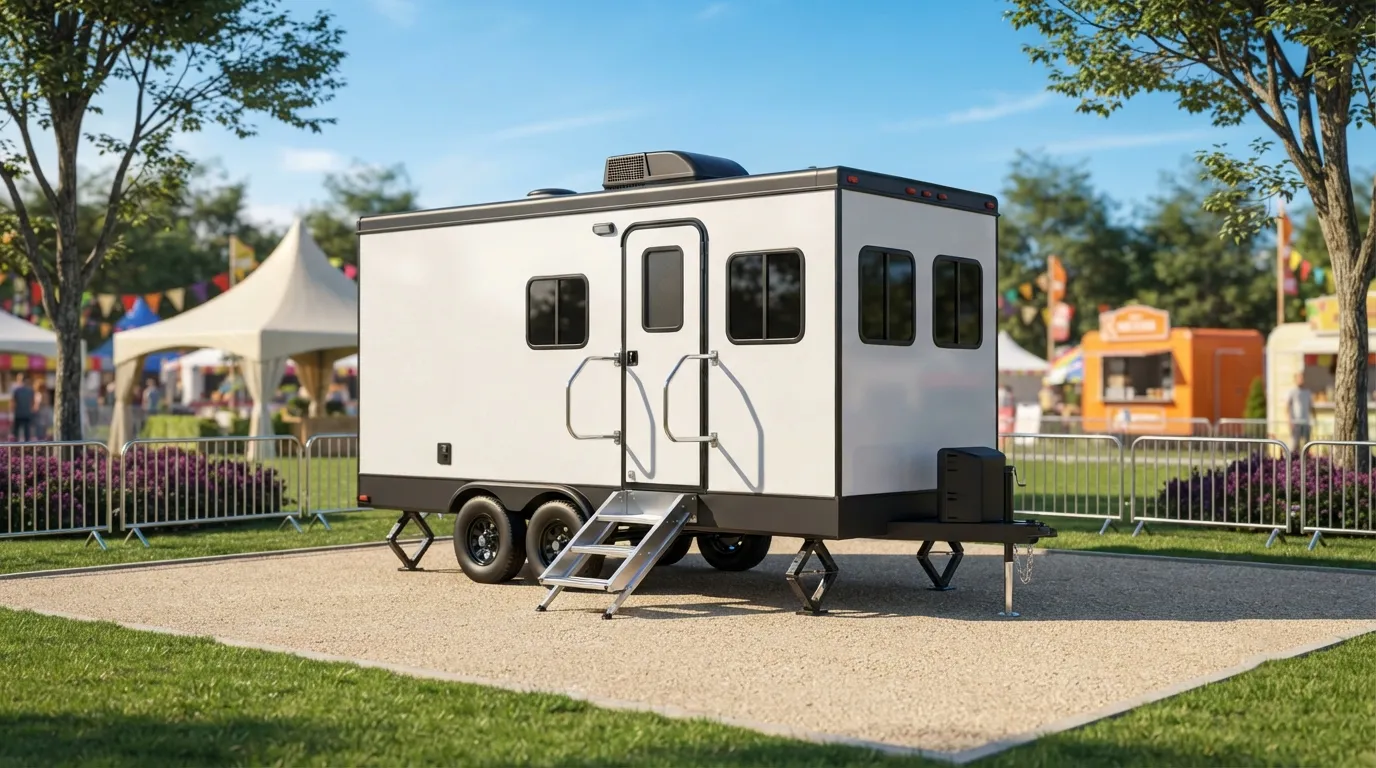
No. 29 CFR 1910.141(d)(2) specifically requires soap and towels or a hand-drying device, and sanitizer doesn't meet that bar on its own. This trips up a lot of event planners in Towson who think a sanitizer stand at the gate covers them. It doesn't, not for the standard. If your crew is doing any contaminant-related work under OSHA 1926.51(f)(1), you need an actual wash station with running water, not a pump bottle. We rent both: hand sanitizer station rental units for supplemental coverage, and full handwashing station rental setups for the standard itself. Some clients also add a portable sink rental for food service events near Towson, since that use case has its own hygiene expectations beyond OSHA's construction language. If you're staging an event out toward Hampton, 4.3 miles northeast, or Parkville, 4.7 miles east, pair a wash station with your event restroom rental order so guests have both covered from day one.
How much does a handwashing station rental cost in Towson?
It depends on unit type and duration, but standard portable toilet rentals run from about 100 to 350 dollars a day depending on features. Ask for a bundled quote when you add wash stations, since delivery fees often combine with your main portable restroom rental order.
Do I need a permit for a handwashing station on public property?
Placement in the public right of way needs confirming with the city of Towson directly. We haven't verified a specific ordinance for this, so check with the local permitting office before you set anything on a sidewalk or street easement.
Can I rent just a handwashing station without toilets?
Yes. Many event and food service clients rent wash stations alone, especially for smaller gatherings. Check our portable sink rental option if you need a full sink setup instead of a basic station.
How often do handwashing stations get serviced?
Service intervals follow the same baseline as portable toilets: one visit per week for moderate use, per ANSI/PSAI Z4.3. High-traffic sites in Towson often need twice-weekly service to keep soap and water stocked.
What's required for handwashing on a farm job site?
OSHA 1928.110 requires one facility per 20 hand-labor employees, positioned within a quarter mile walk. See our farm and agricultural restrooms page for how we handle that spacing requirement on rural sites.
Next step
Get a delivery date
Tell us the address, the dates and the headcount. We size the order and confirm the route.