How Fast Can You Deploy Sanitation After a Disaster in Towson?
Speed matters most in the first 48 hours. A burst water main, a flooded basement, or a wind event that takes down power lines all create the same problem: no working toilets and no clean water. Towson Porta Pros keeps standard portable toilets ready to roll, and because our base sits close to the city, we are not driving in from Pikesville, 8.0 miles west, or Mays Chapel, 7.3 miles northwest, to reach you. That proximity cuts hours off deployment when every hour counts.
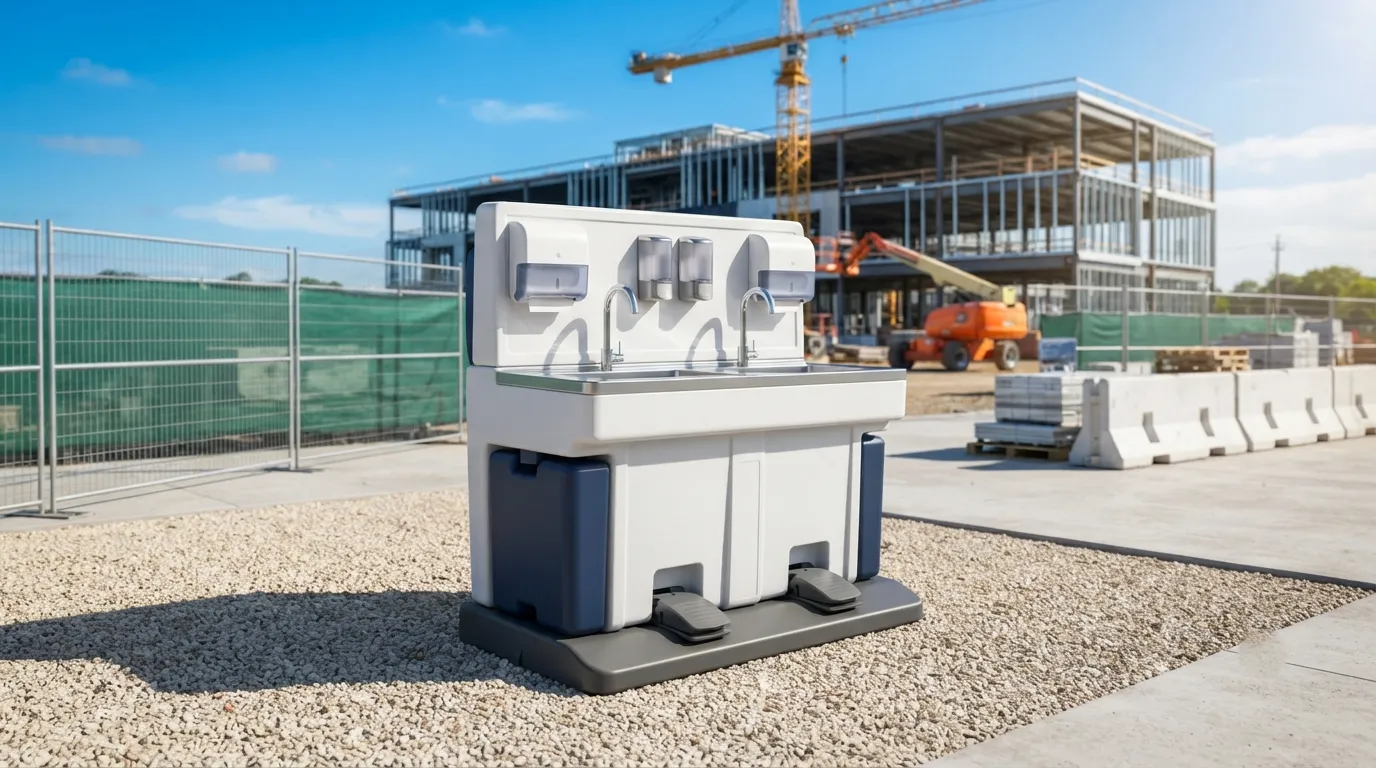
Emergency response is different from a planned event. There is no three-week lead time, no walkthrough, sometimes no working phone line at the site. Our emergency porta potty rental service is built around that reality: shorter notice, faster placement, and units that need no water or sewer hookup to function. For sites with damaged or contaminated water supply, we also bring handwashing station rental units, because OSHA 1926.51(a)(1) requires an adequate supply of potable water at any place of employment, including a disaster staging area or relief shelter being run as a worksite.
If the water table is high or the ground is saturated, a septic system on the property may already be failing. We offer septic pumping service and can assess whether a holding tank rental is a better short-term fix than waiting on repairs.
What Do Relief Shelters and Staging Areas Need for Sanitation?
Shelters need enough toilets for the number of people using them, running around the clock, not on a business-hours schedule. OSHA 1926.51(c)(1) sets the baseline for worksites: one toilet facility for 20 workers or fewer, then one toilet seat and one urinal per 40 workers as headcount climbs past that, dropping to one per 50 once you pass 200 people. Relief operations staffed as worksites should plan against that same ratio, and our how many porta potties do i need guide walks through the math for a specific headcount.
Accessibility cannot be an afterthought during a crisis. ADA Standards section 213.2 requires that where single-user portable units are clustered, at least 5 percent be wheelchair accessible, with a minimum of one no matter how small the cluster. Our ada accessible porta potty units meet the section 304.3.1 turning circle requirement and the 404.2.3 clear door opening, which matters when shelter populations include elderly residents or people with mobility devices. We also handle portable restroom rental for family shelter zones separate from staging and logistics areas, since keeping those populations apart helps with both dignity and crowd flow.
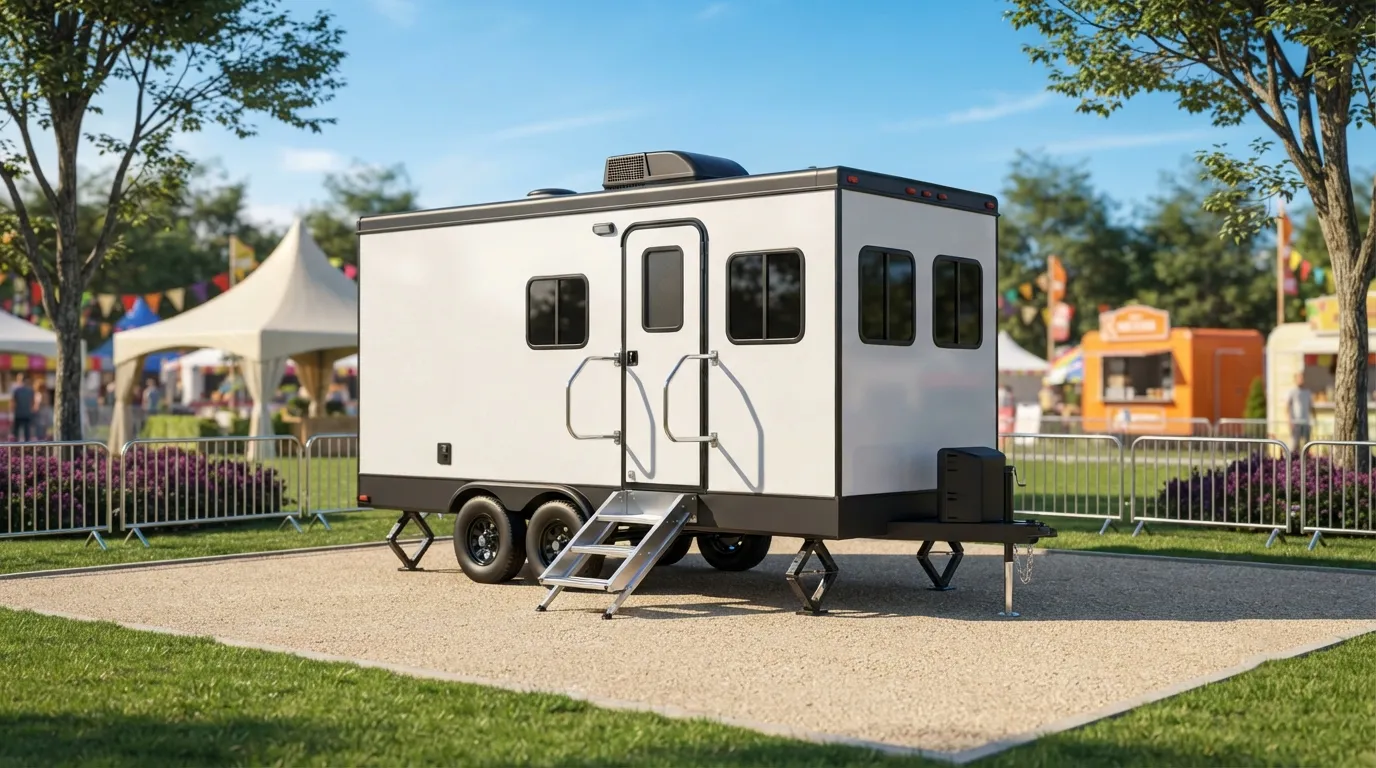
For larger command posts or extended shelter operations, a restroom trailer rental gives staff and displaced residents something closer to normal, with a 4 stall restroom trailer covering a mid-size shelter and an 8 stall restroom trailer suited to a larger site. Debris removal runs alongside sanitation in most disaster response, and our roll-off dumpster rental fleet handles storm debris, while what cannot go in a dumpster covers hazardous material that needs separate handling.
Where Does Equipment Get Placed During an Active Emergency?
Placement during a disaster follows the same access rules as any job site, just under tighter time pressure. A roll-off delivery needs about 60 feet of straight clearance behind the truck, so staging areas with debris piles or downed trees need a clear path before we arrive. Standard units need firm, stable ground per ADA Standards section 302.1, which can be a real challenge on saturated or flooded ground in Towson after heavy rain; we will walk the site with you to find footing that holds.
If the disaster has damaged fencing, security, or created a hazard zone, temporary fence rental can secure a perimeter around debris piles, damaged structures, or equipment staging. For overnight operations, a light tower rental keeps work areas lit per OSHA 1926.56(a) illumination standards, and a temporary power pole can run lighting, pumps, or communications gear where utility power is out. Storage needs come up fast too: relief supplies, tools, and donated goods often need a storage container rental on site rather than shuttled off daily. Placement guidance for any of these lives in our porta potty placement guide, and permit questions specific to Towson are covered in porta potty permit requirements.
How much does emergency sanitation cost during a disaster?
Standard unit rentals run in the same bands as planned events, typically $100 to $350 a day depending on duration and volume. Multi-week deployments price closer to weekly or monthly rates. See porta potty rental cost for full breakdowns before you commit to a duration.
Can you deliver on short notice, even the same day?
Often yes, depending on current inventory and your location. Emergency response is what our emergency porta potty rental service is built for. Call as soon as you know what you need. Distance from our staging point to Towson keeps response times short.
Do you provide handwashing stations for shelters?
Yes. Shelters and relief staging areas need working handwashing setups, and 29 CFR 1910.141(d)(2) requires soap and towels or a hand drying device, not sanitizer alone. Our portable sink rental options meet that standard for shelter kitchens and intake areas.
What if our septic system fails during flooding?
Flooded or overwhelmed septic systems need pumping or a temporary holding tank fast. Check septic tank warning signs for what to look for, and call our emergency septic service line directly rather than waiting for a scheduled slot.
How do you handle debris cleanup alongside sanitation?
We run both from the same dispatch, so a construction dumpster rental for storm debris can arrive with your sanitation units. Weight limits matter for wet debris; see dumpster weight limits before loading heavy, water-soaked material.
Next step
Get a delivery date
Tell us the address, the dates and the headcount. We size the order and confirm the route.