Where should a porta potty go on a job site or yard?
Pick flat, stable ground first. Standard porta potty rental units run about 44 by 48 inches on the ground and stand roughly 92 inches tall, so give the unit room plus a service lane. ADA Standards section 302.1 calls for surfaces that are stable, firm and slip resistant, which rules out loose gravel or soft turf that sinks under foot traffic. Keep units off slopes and away from storm drains. For ADA accessible porta potty placement, ADA Standards section 304.3.1 requires a 60 inch turning circle in front of the unit, and section 403.5.1 sets minimum clear route width at 36 inches, so the path in matters as much as the pad itself. If you are staging near a building entrance in Towson, keep sightlines open and check the porta potty placement guide checklist against your porta potty rental checklist before delivery day. Our porta potty rental in Towson, MD crews walk the site first on larger jobs.
Do porta potty placement rules require a permit in Towson?
Placement in the public right of way needs confirming with the city; we are not naming a specific Towson ordinance here because it was not verified. If your unit sits fully on private property, set back from the sidewalk, you typically avoid that question. Ask before you place anything on a street, median, or curb lane. The same caution applies to dumpster placement permit cost and any dumpster placement permit question. Roll-off dumpster rental crews in Towson face the same right-of-way review, and dumpster permit requirements vary enough between jurisdictions that guessing costs more than a phone call. A construction dumpster rental placed on an active job site usually needs 60 feet of straight clearance behind the delivery truck, same as a portable restroom trailer delivery. If your event needs both, check event restroom rental placement guidance alongside dumpster siting so nothing blocks emergency access.
How many units do I need and where do they go on a construction site?
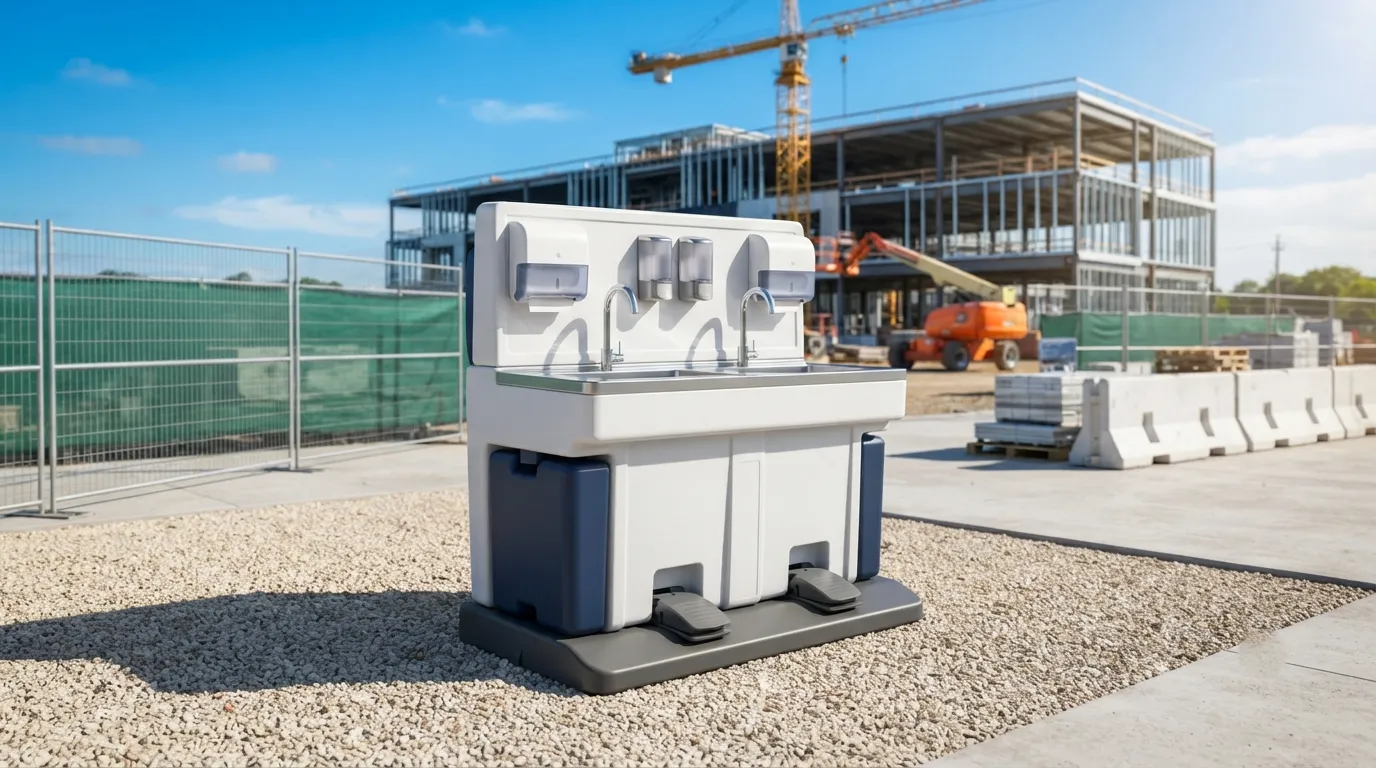
OSHA 1926.51(c)(1) sets the ratio: one toilet for 20 or fewer construction workers, then one toilet and one urinal per 40 workers up to 200, and one per 50 beyond that. Spread units across the site rather than clustering them at one gate, especially on a spread-out construction site services job. ADA Standards section 213.2 requires that at least 5 percent of a cluster of single-user units be accessible, with a minimum of one, so a bank of six standard units needs an ADA unit worked into the layout, not tacked on at the end. OSHA 1926.51(a)(1) also requires potable water on site, which is why crews pair units with a handwashing station rental or a portable sink rental. If work involves paints, coatings, herbicides or insecticides, OSHA 1926.51(f)(1) requires washing facilities near that work, separate from general toilet counts. Farms hand-laboring crews fall under OSHA 1928.110 instead, which calls for one facility per 20 workers within a quarter mile walk, relevant for farm and agricultural restrooms around Towson.
Where should a restroom trailer or storage container sit on the property?
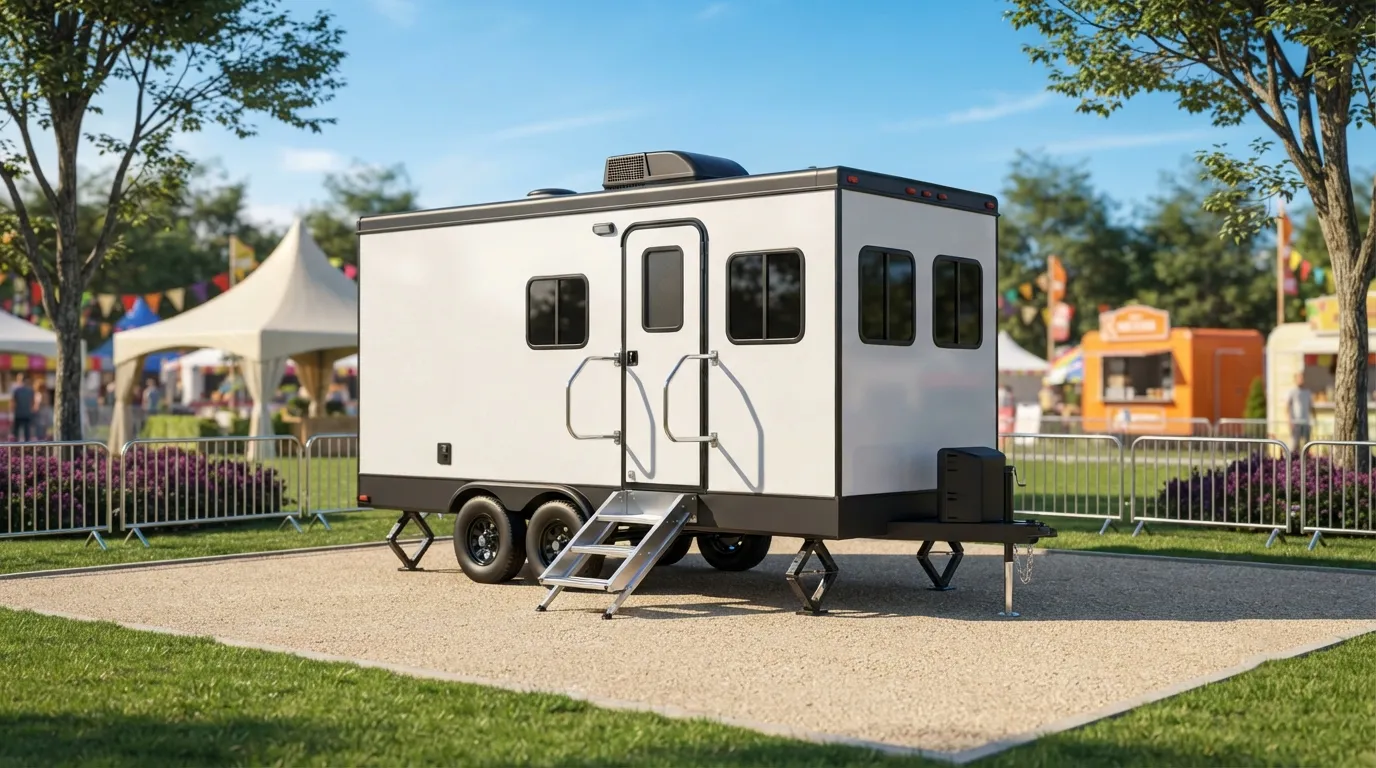
Restroom trailers need a level, compacted pad and full clearance for the delivery truck, the same 60 feet of straight approach a roll-off needs. ADA Standards section 404.2.3 sets minimum clear door opening at 32 inches, worth checking before you commit to a tight side-yard placement for a restroom trailer rental or a 4 stall restroom trailer. Ground fault protection matters too. If the trailer runs off site power, OSHA 1926.404(b)(1)(ii) requires GFCI protection on that circuit. Storage containers and mobile offices need the same flat, drained pad. If a mobile office trailer rental shows up with damaged mobile office trailer replacement doors, that is a maintenance call to the vendor, not a placement fix. Same logic applies to an Ozark River portable sink; parts wear out with heavy handwashing traffic, and Ozark River portable sink replacement parts are a manufacturer part, not a placement issue. For storage container rental or a 20ft storage container, keep it off soft ground so doors do not bind. Septic work follows its own siting logic. A residential tank is typically pumped every 3 to 5 years depending on tank size and household size, and a grease interceptor gets pumped once fats, oils, grease and solids reach 25 percent of liquid depth. Whether you are booking a septic pumping service in Towson or researching a placerville septic pumping service in another market, the truck needs the same clear approach as a roll-off.
FAQ
Can I place a porta potty on the street in front of my house?
Usually not without checking first. Placement in the public right of way needs confirming with the city, and Towson has no verified blanket rule here. Keep it on your driveway or yard, set back from the sidewalk, and you sidestep the question entirely for a short home renovation porta potty job.
How much clearance does a delivery truck need?
Plan on roughly 60 feet of straight clearance behind the truck for both a roll-off dumpster and a restroom trailer. Tight urban lots in Towson sometimes cannot offer that, so tell your request a quote rep about driveway length up front.
Does an ADA unit need extra space compared to a standard unit?
Yes. ADA Standards section 304.3.1 requires a 60 inch turning circle, more than a standard 44 by 48 inch footprint needs. Rentals run higher too: an ADA unit typically runs $200 to $400 a day, compared with $100 to $350 for a standard unit per porta potty rental cost.
What happens if the ground is too soft or sloped?
The unit gets set on boards or relocated. ADA Standards 302.1 calls for stable, slip resistant surfaces, and a tipped unit is a hazard nobody wants on a job site. Flag drainage issues before delivery, not after.
Do I need a permit for a dumpster on my property?
Not usually on private ground set back from the street. Dumpster placement permit cost and rules depend on where the container sits, so check dumpster permit requirements before ordering a 30 yard dumpster rental for a Towson renovation.
Next step
Get a delivery date
Tell us the address, the dates and the headcount. We size the order and confirm the route.